


NCLC Conserves 48th Working Farm

Along the border between New Milford and Washington, 103 acres are now permanently protected as forest and farmland, thanks to the vision and commitment of its owner, Ramanan Raghavendran, who donated the land to create the Chapin Ramanan Farm.
Every farm protected in Connecticut is meaningful. Connecticut is losing farmland at an alarming rate. According to a recent study published by American Farmland Trust, the State’s agricultural lands rank in the top three for most at risk of loss to development in the country. Since 1965, NCLC has been dedicated to conserving working agricultural lands, and the Chapin Ramanan Farm marks its 48th working farm conserved.
The Chapin Ramanan Farm is particularly scenic with distant views of the western horizon. Stonewalls crisscross through its fields, a reminder of the history of the land, which has been in agricultural production for hundreds of years. Today, the fields are still hayed by members of the Chapin family, who have a long history of farming in New Milford.
The conservation of a single property often takes decades or more. The conservation of the Chapin Ramanan Farm began in 2008 when members of the Chapin family sold over 100 acres of the original dairy farm to Mr. Raghavendran, who, in turn, granted a conservation easement over 73 acres to NCLC in 2009. Earlier this year, Mr. Raghavendran chose to give the entire property to NCLC—both the 73 acres previously protected by easement and an additional 30 acres of hayfields and forest that were unprotected and could have been developed.
The Chapin Ramanan Farm contains pristine woodlands, with mature and diverse hardwood species, that protect 2,500 feet of Walker Brook and two of its tributaries. Protecting land around rivers and streams keeps the waters cool and clean. In addition, many species, including reptiles and amphibians, depend on the land around rivers and streams for their survival. The forests themselves provide excellent habitat for numerous species, including bobcat, bear, and coyote
With the addition of the Chapin Ramanan Farm, NCLC now protects 13,158 acres in Litchfield and northern Fairfield Counties, including 21 public hiking preserves, over 40 working farms, and more than 3,000 of acres of habitat for rare and endangered species.
NCLC’s annual meeting and holiday party was a time to celebrate volunteers, partnerships, and share conservation goals for the region. More than 60 members from NCLC and from land trusts throughout the region gathered at the Kent Community House on December 4 and enjoyed refreshments and good conversation.
Board members in attendance included NCLC board president Hiram P. Williams and vice-president Margery Feldberg, who will assume the role of president when Williams steps down in January.
Williams, who has been the head of the board for 12 years, commented, “I feel good about where the organization is and has accomplished and I am excited about where we are going.” His proudest accomplishments have been building an excellent staff, led by Executive Director Catherine Rawson, and a dedicated board of directors. “The combination of the two is going to enable us to meet some pretty significant conservation challenges in the next ten years,” he said.
For her part, Feldberg is looking forward to her new role. “Our area has been discovered and there is a lot of pressure, but we are confident we can continue to preserve and protect space. We are scaling up to triple our pace of conservation between now and 2030 and we look forward to the challenge,” she said.
Amanda Branson, NCLC’s director of operations and finance, reviewed highlights from the year and spoke about the need to increase the pace of conservation in the coming years. The State of Connecticut has a goal to protect 21 percent of the state’s lands and water by 2023. The state intends to protect 10 percent and land trusts and other partners are tasked with protecting 11 percent. Based on the State’s current pace, it would take 65 years to reach this goal. Branson explained that land trusts have done extraordinary work to advance conservation and that any hope of reaching the State’s goal rests on land trusts.
Members of area land trusts who attended the event expressed appreciation for the help they receive from NCLC, including Julie Stuart of the Bridgewater Land Trust, who commented, “I came to the meeting to learn from the best, I appreciate everything that they do.”
Branson took the conversation a step further and reported on NCLC’s Pace of Conservation Report, an analysis of the collective conservation of the region’s land trusts within the 30×30 framework. This global conservation goal calls for 30 percent of the earth’s lands and waters to be conserved by 2030. NCLC aggregated transaction data of 19 land trusts working in Litchfield and northern Fairfield Counties between 2010 and 2020 and found that during this period land trusts protected 9,772 acres. The Pace of Conservation Report is also evaluated the role of lands that have some protection against development but are not permanently protected. This category includes water company lands and some privately owned recreational lands. Including these, “quasi-protected” lands in combination with the collective work of our region’s land trusts, achieving a 30×30 for Northwest Connecticut is possible. NCLC set a goal in 2021 to triple its pace to protect 20,000 acres by 2030 in concert with the area’s 22 land trusts and communities
The presentation concluded with recognition and celebration of the more than 90 volunteers who donated over 1,000 hours of their time to NCLC’s trails, preserves, and public events.

Founded in 1965, NCLC is the largest land trust in Connecticut, protecting 13,000 acres of vast, connected natural areas in Litchfield and northern Fairfield counties. The lands include 21 public hiking preserves, 41 working farms, and over 3,000 acres of habitat for rare and endangered species, and 500 nature preserves in 17 towns.
Northwest Connecticut is a place of regional conservation significance. The region’s forests and cold-water streams provide habitat for more than 320 rare species. Our vast, natural lands are among the most complex and climate resilient in Southern New England and are centrally located in a multi-state wildlife corridor.
Click here to view a map of Connecticut’s portion of this essential wildlife corridor.
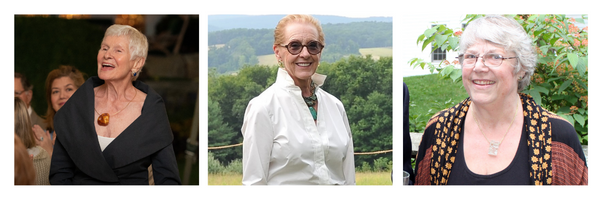
Lou Memoli is the former president of Brookfield Open Space Legacy, Inc (BOSLI), the current chair of NCLC’s Brookfield Council, and a lifelong supporter of the environment. This month we asked Lou to share more about the role volunteering and the environment have played in his life.

Thank you Lou for all that you do for NCLC!

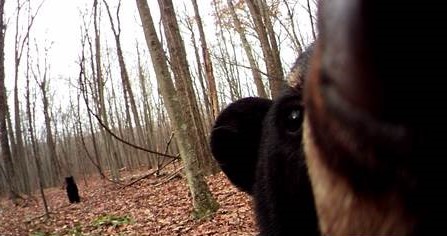
As bears prepare for hibernation, they increase their food intake to 20,000 calories a day to build up energy reserves for winter. Acorns are a fatty, calorie-dense source that many animals, especially bears, rely on ahead of winter. This year, the Connecticut Agricultural Experimental Station reports widespread failure of the acorn crop. DEEP officials report that the lack of acorns could cause bears to seek out human-associated food like garbage. Avoid attracting bears to your yard by following some simple practices.
What causes the fluctuations in the acorn crop? Oak trees, like many nut-bearing trees, are known for synchronizing seed production. The fluctuation is an evolutionary strategy called predator satiation. When the oaks in an area have a bumper crop of acorns, called a mast year, predators (chipmunks, squirrels, turkeys, blue jays, deer, bear, etc.) can’t eat all the acorns. This allows more nuts to grow into trees. The years of lean acorn production keep predator populations low, so there are fewer animals to eat all the seeds in a mast year.
Want to hear more about the interactions between oak trees and animals? Watch the Doug Tallamy presentation, The Nature of Oaks, and learn more about these amazing trees.
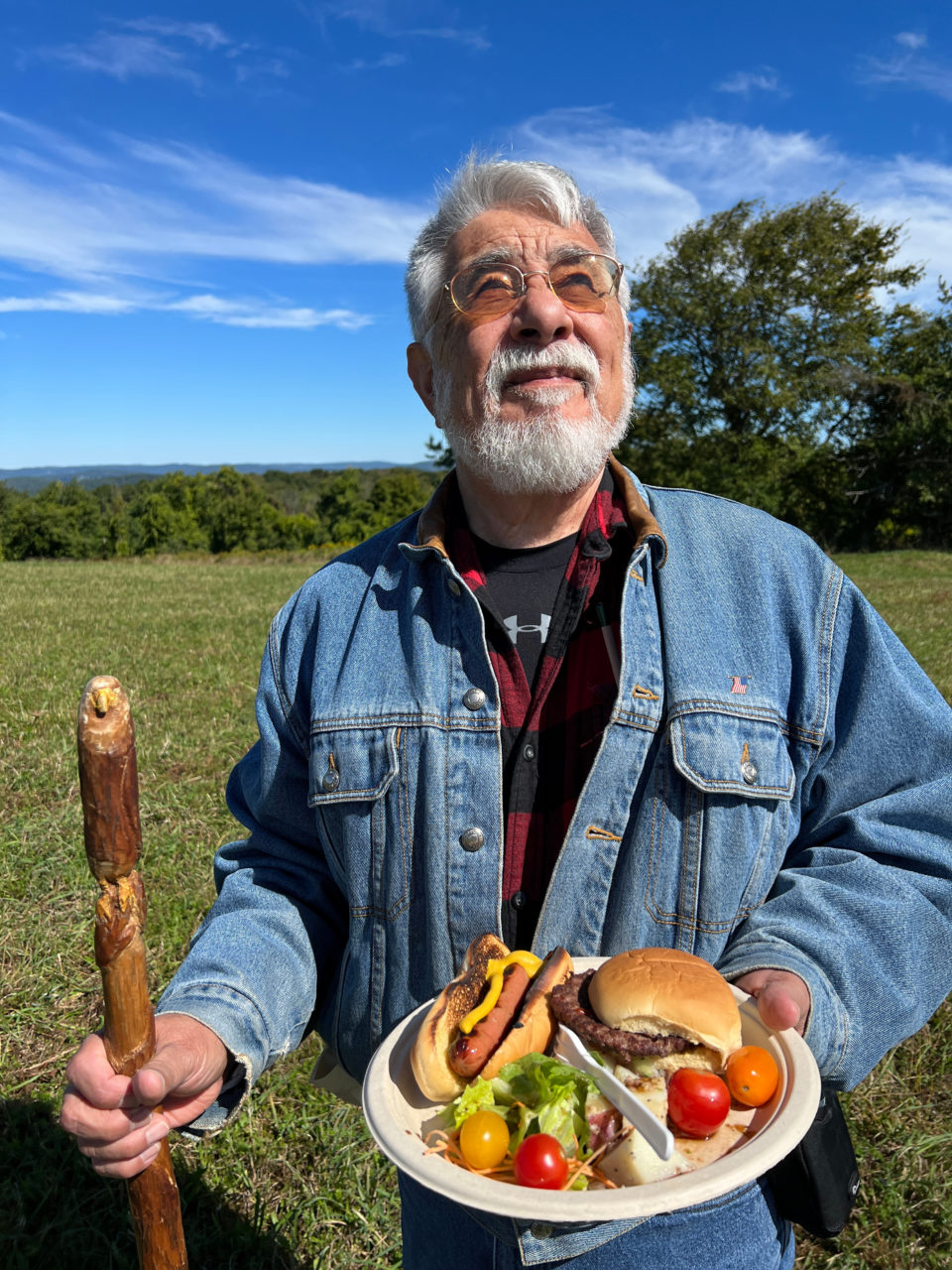
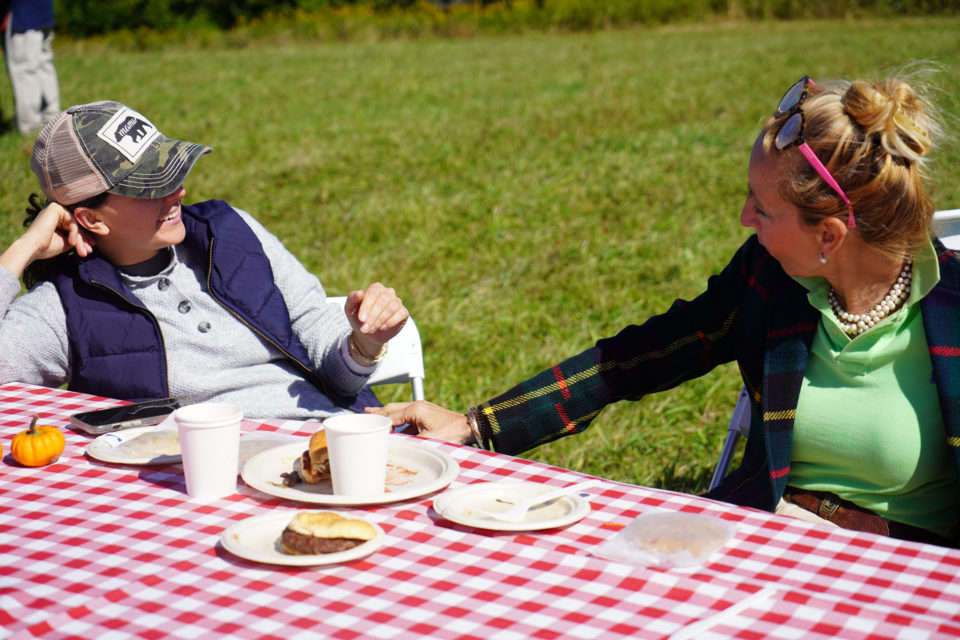
On a breezy, blue-sky September day, NCLC celebrated its first community picnic since the pandemic began at the 45-acre Hadlow Preserve in Sherman. The event, held on one of the region’s most beautiful scenic vistas, was a favorite annual Naromi Land Trust tradition. This year marked the first time NCLC hosted the event since Naromi Land Trust and Weantinoge Heritage Land Trust merged to form NCLC in 2020.
It was a perfect opportunity for members, conservation partners and leaders, and those new to NCLC to gather and share a barbecue lunch, fly kites, play lawn games, and learn more about the NCLC extensive trail network, which includes 21 trials with 9 in Sherman alone. After lunch, there was time to kick back and enjoy one of the most glorious views in northwestern Connecticut.
Taking in the 360-degree view at the top of the meadow, Frank Ruiz of New Milford said he felt like he was on top of the world. “I am always looking for new places to hike and I will definitely return here with my dogs,” he said.
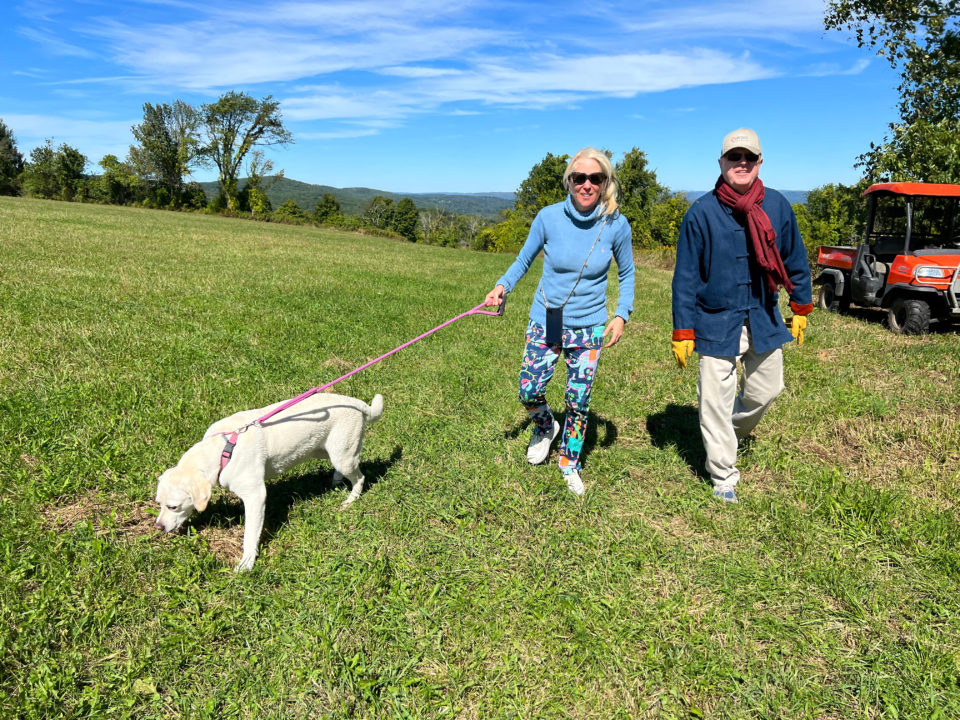
Dogs are allowed on NCLC preserves provided they are on a leash. Catherine Heald, who was walking her golden retriever with her husband, Donald, remarked on the success of the land trust merger. “We’ve been involved with what was Naromi for 22 years so now we are thrilled with the merger, I think it is so much better for everyone. We love this picnic and we are thrilled to have all our friends from Kent and Washington here now, too.” said Catherine Heald.
The tables covered with red-and-white checked cloth were set up on a section of the field named Kemp’s Meadow after P. Kempton Mandeville, a long-time Treasurer of Naromi Land Trust.
Former Sherman resident Mary Hadlow bequeathed the Hadlow Preserve to Naromi Land Trust in 1998, and she had donated multiple other properties to Naromi during her lifetime, including the heart of the Mallory Preserve, another public preserve in Sherman.
A large portion of the Hadlow Preserve is leased to the Leszczynski Family Farm for hay production. The fields on the easternmost end of the preserve are not mowed and are managed for grassland birds. Species of special concern, including bobolinks and savannah sparrows, have been sighted on the property. A kestrel box, which American Kestrels use for nesting, was installed along the northern boundary, and several kestrels have fledged from the box in recent years.